Sport
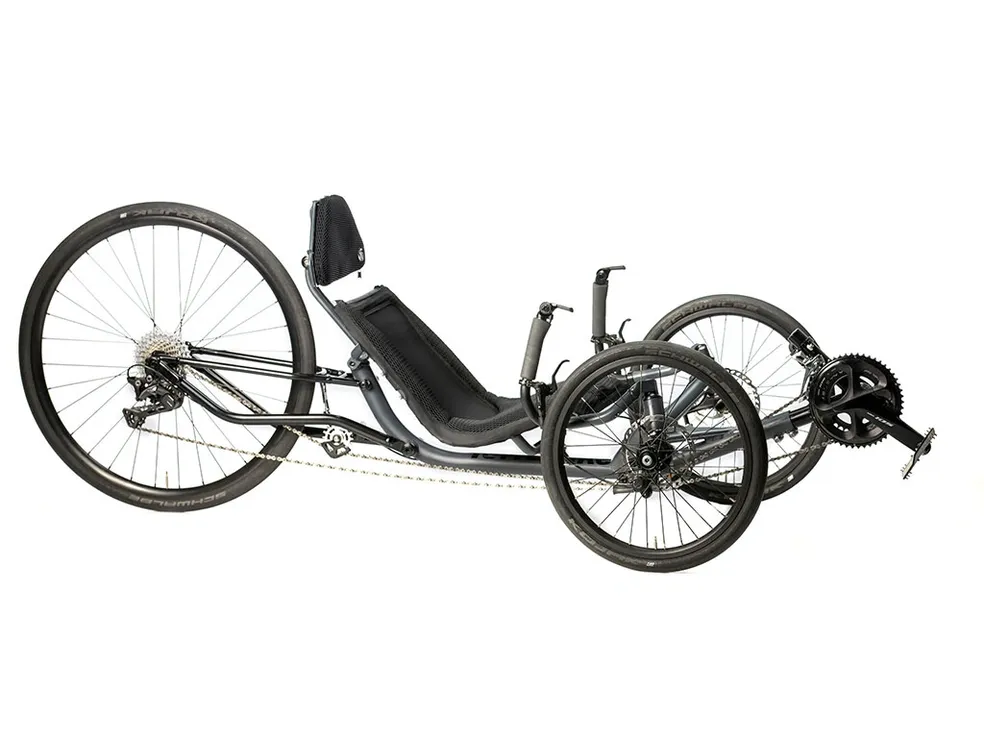
Direct Steering
Sharp & Sporty
Handlebars connect right to the front wheels. Sharp, sporty, immediate. Most performance trikes go this route.
There's no single "best" recumbent trike — only the best one for your body, your terrain, and the way you want to ride. Here's how we help every customer narrow it down.
Inseam, X-seam, hip width, and reach. We measure every customer and match you to the trikes that fit your body — not the other way around.
Daily neighborhood loops? Long Ladiga Trail tours? Loaded camping? Each calls for a different geometry, gearing, and wheel setup.
Take three trikes out back-to-back. The right one becomes obvious in the first quarter mile. We've watched it happen hundreds of times.
Most premium trikes fit a 12-inch range of riders. Locate your X-seam — we'll show you which models match before you visit. How to measure →
Ranges are approximate. We confirm fit in the shop and adjust seat angle, boom length, and bottom-bracket position for your exact body.
The single biggest reason people fall out of love with a recumbent is poor fit. Too tight at the knees and you can't push power. Too long and your toes can't reach the pedals. We start every consultation with a proper fitting — and we'll fit you for free.
Recumbents steer in three main ways, and each has a personality. Try all three on the same afternoon — the right one becomes obvious.
Handlebars connect right to the front wheels. Sharp, sporty, immediate. Most performance trikes go this route.
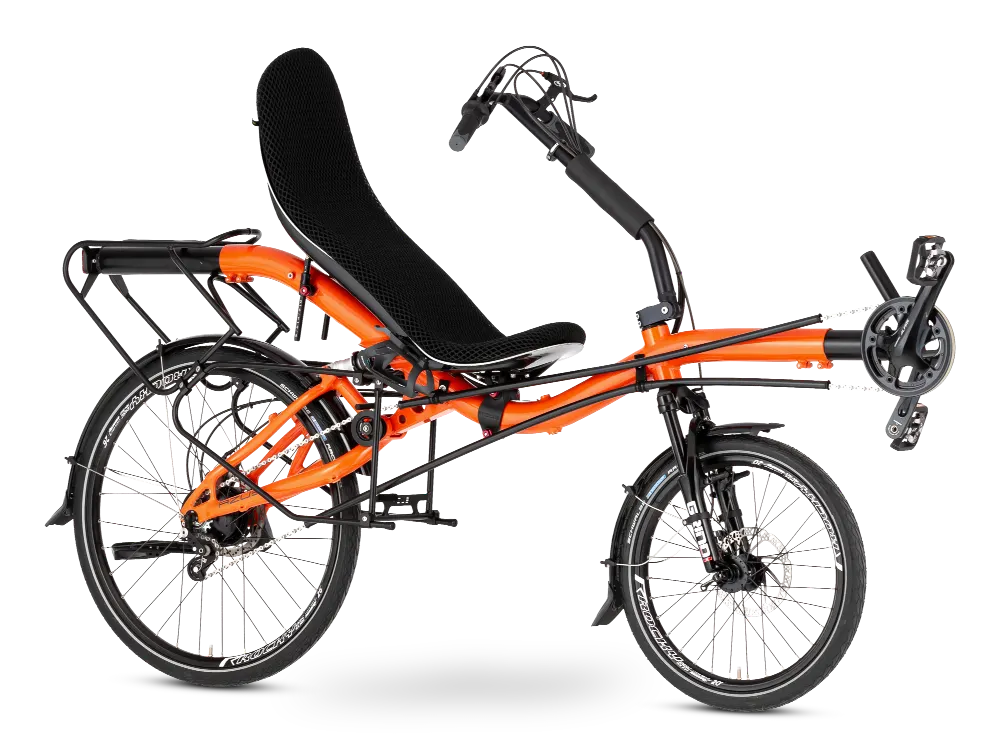
Bars run through a linkage. Smoother, more relaxed, easier on the wrists for long days in the saddle.
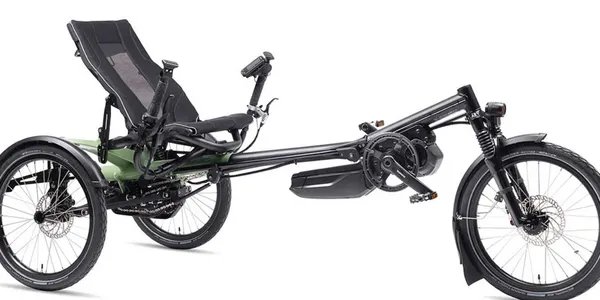
Bars come up between your knees or above your shoulders. Different trikes for different riders — try both before you decide.
Smaller front wheels (16"–20") accelerate quickly and corner sharply. Bigger rear wheels (26", 700c) roll over potholes and hold speed on long flats. Three-wheel-equal setups split the difference.
We'll let you ride all three on the same afternoon.
Hilly Alabama backroads need lower granny gears. Rail-trail flats reward a tighter, faster cassette. We tune every new trike to your terrain before you take it home — not before you walk in.
"The biggest mistake first-time buyers make is shopping by spec sheet. The trike that wins on paper rarely wins on the trail."
Maybe you want a lift on the climbs. Maybe you want to keep up with a faster spouse. Maybe your knees are done with hills entirely.
We're Bosch, Shimano, and EBO certified — and we'll tell you honestly when you don't need an assist (it happens more than you'd think).
Read the E-Assist Guide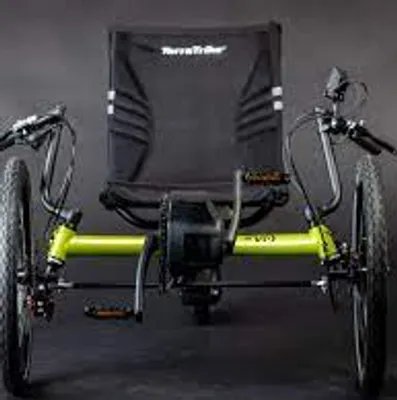
We're often asked about the value of a used trike. The honest answer is that it's extremely difficult to tell without inspecting the trike in person. Some "great deals" turn out not to be once you factor in fitting, repair, and getting the trike to actually perform for the rider.
Call us anytime with questions about a used trike you're considering — even if you're not buying it from us.

Recent models only. Older trikes can leave you stranded on parts.
Inspect carefully. Frame, shifters, steering, brakes, cables, tires, tubes, overall condition.
Fit matters more than price. Don't settle for a poor fit just to save a few dollars.
Compare to new. Warranty, advice, support, and service from a quality dealer often beats a private "lightly used" sale.
Watch for garage queens. Trikes that have sat for years with no maintenance often need more work than they look.
Recumbent triking is fun cycling that improves your fitness — and you'll quickly notice the premium quality of the trikes we carry. Your trike is an investment in your quality of life, and a good one will provide many years of fun, fitness, and adventure.
You will not find poor-quality, unreliable, Amazon-type trikes in our shops. The best deal is the trike that lasts. We call that value, and we can help you compare and see the difference.
Bring this guide to your appointment, or skip it entirely — either way we'll spend the time it takes to find your trike.